The Divine Comedy
Dante Alighieri
Dante Alighieri was a preeminent Italian poet of the late Middle Ages, widely recognized as the father of the Italian language. Born in Florence, he received a comprehensive education in classical and scholastic traditions, deeply influenced by Virgil and Aristotle. His political involvement led to exile, during which he wandered through various Italian courts. It was in exile that he composed his monumental epic, The Divine Comedy, using the Tuscan dialect to shape a unified literary language. His work synthesizes theology, philosophy, and mythology, reflecting the medieval worldview while anticipating Renaissance humanism. Dante’s legacy endures as a cornerstone of Western literature, profoundly shaping European poetic and intellectual traditions across centuries.
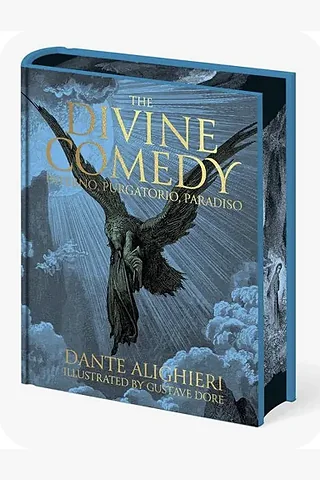
Book Brief
A poet journeys through darkness, purgatory, and heaven to witness divine truth and redemption.
Book type
Epic religious poetry
Fun Facts
The Divine Comedy was written during Dante’s final years of exile, originally titled Comedy before later generations added the adjective Divine. Composed in terza rima, the work is divided into three realms—Inferno, Purgatorio, and Paradiso—each containing thirty-three cantos plus one introductory canto, symbolizing spiritual completeness. Dante casts himself as the protagonist, guided by Virgil and Beatrice through a meticulously structured universe. The poem reflects Florentine political conflicts while synthesizing Aristotelian philosophy and Christian theology. By writing in Tuscan vernacular rather than Latin, Dante helped establish a unified Italian literary language. Its influence shaped Renaissance art, literature, and religious thought, securing its place as a foundational work of Western culture.
How to get this book
If you are wondering where to get the book, simply click the image below to enter the book access page. The process is straightforward and convenient, allowing you to easily find the reading materials you need. Thank you for your understanding and support, and enjoy your reading.